Start With a Plan, Not a Dumpster
We see the exhaustion directly during almost every property cleanout.
When determining what to do with belongings before selling house, whether for a family estate or commercial space, the process always feels overwhelming. The instinct is either to keep everything out of guilt or to throw it all into a rented roll-off bin.
A simple plan works much better. You must focus on three core phases:
- Securing essential documents
- Distributing family keepsakes
- Liquidating the remaining items
Our typical advice is to tackle the job methodically to avoid burnout. A 2026 Talker Research study actually found that 49% of Americans would rather inherit nothing at all than sort through a relative’s belongings. We will outline the exact steps to protect your valuables and clear the space efficiently.
And if you are considering selling a house that needs a cleanout, you may not have to clear everything before you sell.
Step 1: Documents and Valuables First
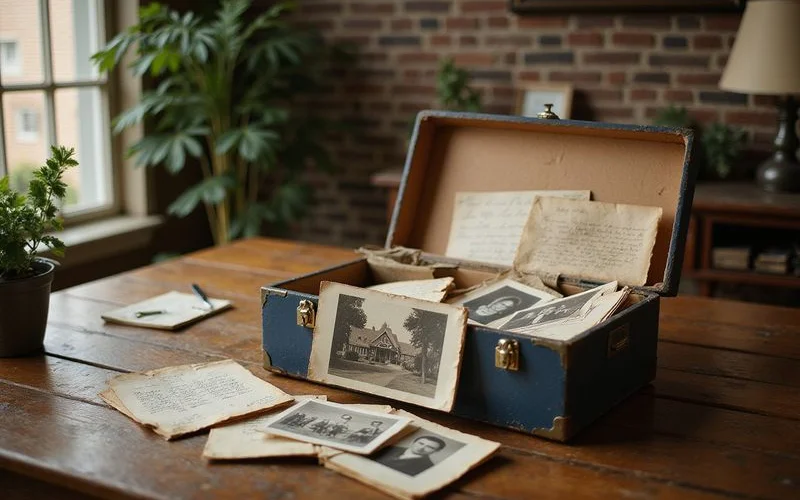
We always tell clients to secure the paperwork before a single box leaves the property. Missing a crucial document like a DD-214 military discharge paper or an original property deed can delay a property transfer for months.
The personal representative of an estate needs specific legal and financial records to close accounts. Uncashed US savings bonds or hidden cash often turn up in unexpected places like hollow books or freezer bags.
Our team recommends buying a fireproof lockbox specifically for this step. Before anything leaves the house, search methodically for these items:
| Category | Examples | Where to look |
|---|---|---|
| Legal documents | Wills, deeds, titles, trust papers | Desks, file cabinets, safes |
| Financial records | Bank and investment statements, tax returns | Drawers, boxes, closets |
| Insurance | Life, home, and auto policies | Files, envelopes |
| Valuables | Jewelry, cash, coins, collectibles | Dressers, closets, books, freezers |
| Personal records | Birth certificates, passports, military records | Boxes, envelopes |
| Digital items | Computers, phones, hard drives | Desks, closets |
Set these critical items aside in a secure location immediately. Leaving paperwork in the house during an active cleanout is a major risk for identity theft.
Step 2: Family Items and Keepsakes
Our experience shows that distributing heirlooms is often the most stressful part of the process. You must give family members a fair chance to choose items with personal meaning.
That 2026 Talker Research survey noted that 51% of people prefer receiving a select few meaningful items over inheriting everything a loved one owned. We highly recommend using a shared Google Sheet or an estate-sorting app like Nemu to catalog the inventory.
These digital tools let relatives claim photos, artwork, or tools without arguing in the living room, making estate belongings sorting much easier. A few proven tips for smooth family distribution:
- Set a firm date by which everyone must claim their chosen pieces.
- Photograph larger furniture for relatives who live out of state.
- Agree on a random lottery system to handle items more than one person wants.
- Ship or securely store the claimed items before starting the next sorting stage.
Leaving claimed items in the house often leads to accidental donations. Clear communication removes the friction from this sensitive step.
Step 3: Sell, Donate, or Recycle
We suggest categorizing the remaining belongings into clear channels to minimize landfill waste. Once the family takes their share, you can sort the rest using local resources like the Twin Cities Habitat for Humanity ReStore on Minnehaha Avenue in Minneapolis.
Our clients often use their free priority pickup service for large appliances and furniture, provided they are clean and in working condition. For household hazardous waste like old paint, pool chemicals, and batteries, the Hennepin County drop-off facilities in Brooklyn Park and Bloomington are your best local option.
They require these materials to be in sealed containers of five gallons or less. Review your disposal choices here:
| Option | Good for | Minneapolis-area options |
|---|---|---|
| Estate sale | Furniture, collectibles, household goods | Local estate sale companies |
| Donation | Usable clothing, furniture, kitchenware | Charity pickup services |
| Building materials | Fixtures, doors, cabinets, some appliances | Twin Cities Habitat for Humanity ReStore |
| Recycling | Appliances, electronics, metal | Approved recyclers |
| Hazardous waste | Paint, chemicals, batteries | Hennepin County household hazardous waste drop-off |
| Trash | Items that can’t be reused | Licensed haulers or a dumpster |
If a dumpster goes on the street, the city of Minneapolis usually requires a Right of Way permit. Dumpster rentals in the area average around $749 in 2026, and Hennepin County adds a 15.5% environmental charge for residential waste. Check all city requirements before ordering one.
You don’t have to finish before selling
Many owners take what matters, then leave the rest under a written agreement with the buyer. That can save weeks of work and the cost of removal.
Step 4: Decide What Can Stay
We frequently buy houses with the contents still inside to save sellers a massive headache. In a direct real estate sale, the purchase agreement dictates exactly what stays and what goes.
You can use a Personal Property Addendum to list specific furniture or commercial fixtures that will transfer with the building. Our standard agreements always clarify the cleanup expectations so there is no confusion on closing day.
Leaving a house full of items versus leaving it broom-clean will directly affect the final purchase price. A few things to settle in writing:
- Which specific items are included in the sale and which are excluded.
- Who holds the responsibility to remove anything left after closing.
- Whether the house needs to be broom-clean at possession.
- How the estimated cost of cleanup is reflected in the price.
Putting these terms in the contract prevents last-minute disputes at the final walkthrough. Buyers and sellers both benefit from total transparency here.
Pace Yourself When Deciding What to Do With Belongings Before Selling House
We watch families burn out quickly when they try to clean out parents house before selling in a single weekend. Sorting a lifetime of belongings takes much longer than most people anticipate.
Data from field service CRM QuoteIQ in 2026 shows that a typical estate cleanout requires between four and ten separate visits. Our best advice is to break the project down room by room or weekend by weekend.
Know When to Delegate
You should hire professional organizers or estate liquidators if the volume exceeds your physical capacity. Ask friends for help with the heavy lifting or simply sorting paperwork.
If you are managing an estate, our page on selling an inherited house explains how belongings fit into the larger process.
How a Direct Sale Can Help
Our founder Ryan Quade grew up right here in Shoreview and attended Summit Academy, giving his work a deeply personal connection to the Twin Cities. When you sell to us, you can pack only what matters and leave the rest behind.
The average cost of a full-service junk removal crew in the metro area can easily exceed $3,000 for a heavily cluttered or hoarder house. We absorb that labor and disposal effort so you can skip the dumpster rentals entirely.
Ryan clearly explains how remaining items and cleanup costs are handled in the written offer. This transparency allows you to focus on the things that are actually important to you.
Take the Next Step
Our goal is to make your property transition as smooth as possible. When you finally resolve what to do with belongings before selling house, you can close the chapter on the property without spending your weekends hauling trash bags. Reach out today for a free property assessment, and we can discuss exactly how to handle your specific cleanout needs.
This guide is general information, not legal, tax, or financial advice. Rules change, so confirm current requirements with the official source or a qualified professional.