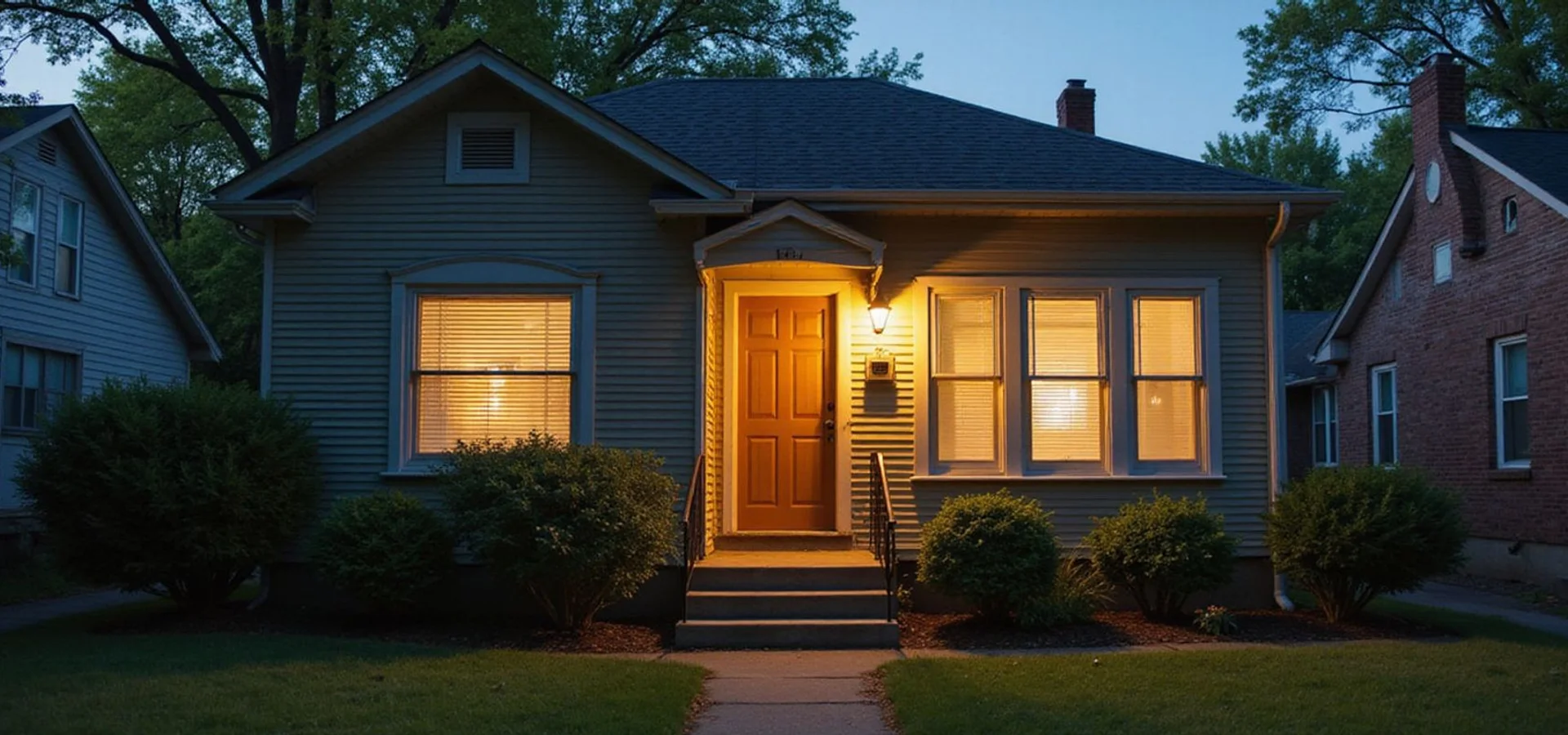


Why It Is Different To Sell a Vacant House in Minneapolis
Have you ever noticed how an empty house somehow keeps finding ways to cost you money? Property taxes, insurance premiums, and winter heating bills pile up fast when no one is living there.
We know how stressful it feels to write checks for a property you no longer use.
The median time on the market for a Minneapolis home in 2026 is around 45 days, which means a traditional sale requires you to keep paying those bills for months.
As a local cash home buyer in Minneapolis, our team focuses on eliminating these holding costs as quickly as possible.
Ryan Quade grew up nearby in Shoreview and attended Summit Academy, giving him a deep understanding of the unique risks facing an empty property. He will review several critical details before making an offer:
- Your home’s actual city status
- Current security and access
- The overall physical condition
These specific factors will directly affect any cash offer you receive.
Start with the real holding costs of a vacant house if you want to put actual numbers on your situation first.
What Is Minneapolis Vacant Building Registration?
The City of Minneapolis requires certain unoccupied properties to register under Minneapolis Code Chapter 249. This program exists to ensure empty structures remain safe and secure for the surrounding neighborhood.
We always warn homeowners about the financial impact of these strict rules. Registered properties pay yearly fees, and a 2026 Govire report noted that certain property fee assessments can exceed $7,200 annually. A steep fee is a massive expense for a house you do not even occupy.
Our team has seen the city require several items before anyone can move back into the building. You might need to secure the following approvals:
- A formal Code Compliance Inspection
- A Certificate of Code Compliance
- A Minneapolis Restoration Agreement
Rules change frequently, so always check the city’s vacant building registration page for current details. You can read our guide on selling a registered vacant building to see exactly how this legal status affects your final sale.
What Ryan Reviews on a Vacant Property
We take a very detailed approach when looking at your unoccupied home. An empty house faces unique risks, so a standard walkthrough is never enough.
Every inspection covers these critical areas to give you an accurate picture of the property’s true value.
| Area | What we look at |
|---|---|
| City status | Registration, any board-up order, condemnation notice, or open compliance orders. |
| Charges | Outstanding city fees, unpaid property taxes, and special assessments. |
| Utilities | Utility shutoff status, reconnection needs, and winterization completion. |
| Security | Lock integrity, property securing, and signs of trespassing or vandalism. |
| Condition | Water intrusion, mold growth, roof stability, foundation health, and mechanicals. |
| Insurance | Vacancy clauses (which typically void coverage after 30 to 60 days) and unoccupied policy requirements. |
The Hidden Costs of Waiting
Most owners know about the obvious expenses like property taxes and basic insurance. The costs that actually surprise people are the slow, hidden ones.
We see homeowners get caught off guard by a vacancy clause that quietly limits their insurance coverage. Most standard homeowner policies void coverage for vandalism or water damage after a home sits empty for just 30 to 60 consecutive days.
A frozen pipe is another massive financial risk during a cold Minnesota winter. Our research shows that while fixing a burst pipe costs about $500 in 2026, the resulting water damage restoration usually runs between $1,000 and $6,000. A sump pump failing while no one is there to hear the alarm can ruin a basement overnight.
Run your own numbers
The vacant house holding cost calculator adds annual property tax, insurance, utilities, upkeep, and any registration fee into a monthly and total cost. Use Hennepin County property records for your actual tax amount.
If winter is getting close, you should read about protecting a vacant home through a Minnesota winter before the first hard freeze hits.
Selling vs. Waiting vs. Listing
There is no single right answer for every situation. Waiting can make sense if you plan to move back or rent the house out soon. We always lay out the trade-offs honestly so you can make an educated choice. Listing on the traditional market may bring a higher top-line price if the house is in great shape.
A traditional sale requires you to keep up with daily property checks, heating bills, and ongoing maintenance.
Our goal is to help you see the complete financial picture. Selling as-is trades some of that top-line price for a much faster process with zero preparation required. Here is a quick look at how your choices compare:
| Your Option | Best For | Financial Reality |
|---|---|---|
| Waiting | Future occupancy or renting. | Highest holding costs and insurance risks. |
| Listing | Homes in pristine condition. | Requires ~45 days on market plus repair costs. |
| Selling As-Is | Fast relief and zero prep. | Trades top retail price for immediate savings and speed. |
Common Situations When You Sell a Vacant House in Minneapolis
Every empty property has a unique story behind it.
We work with local homeowners facing a wide variety of challenging circumstances.
The specific reason for your vacancy will help determine the best path forward.
After a move
You have already relocated, and the empty house is now forcing you to make two housing payments every month. This double financial burden drains savings quickly.
Our relocation page covers all the details of remote coordination. You do not even need to be in Minnesota to complete the sale.
After a loss in the family
An inherited house often sits empty while the family sorts through personal things and legal details. Probate takes time, and maintaining a vacant estate property is exhausting.
We created an inherited house page to answer your questions about legal authority and handling leftover belongings. It covers important next steps:
- Securing the property
- Identifying the legal decision-maker
- Handling leftover personal items
It offers clear guidance for moving forward during a difficult time.
Between tenants
A rental property that went vacant and now needs extensive work can be incredibly frustrating. Landlords often face steep repair bills just to get a unit ready for the next lease.
We regularly purchase former rentals in their exact current condition. You can skip the contractor delays and walk away clean.
After damage
A house might become uninhabitable after a major event like a burst pipe or a severe fire. These properties often face both expensive structural damage and complicated city status issues.
Our damaged house page explains how the review process works for major repairs. We frequently buy homes facing serious issues like:
- Smoke and fire damage
- Flooded basements
- Cracked foundations
You can avoid managing these heavy construction projects entirely.
Are you ready to stop paying holding costs for an empty property?
We make it incredibly easy to sell a vacant house in Minneapolis without any stressful preparation.
Use the form above to reach out today.
Tell Ryan exactly how long the building has been sitting empty, and he will start working on your cash offer.